Public health & ethics

An in-depth breakdown of our research projects and future goals

Project 01

Utilizing Empirical Ethics to Conceptualize Religion-Based Vaccine Hesitancy in the United States

The proposed project investigates vaccine hesitancy among religious leaders and future healthcare workers in the U.S. through the following aims

Investigate religion-based attitudes towards three types of vaccines among Christian and Jewish community leaders and pre-health students in the Phoenix metropolitan area

Our aim is to use empirical ethics qualitative methods to unpack how religious frameworks, morals, values and perceptions of science underpin the willingness acceptance vs. hesitancy among religious individuals and groups.

Begin curriculum development targeted for pre-health students

Curriculum will be designed to explore religion-based attitudes toward vaccine hesitancy, and how these beliefs and attitudes might impact their professional practices and personal well-being.

Investigate the generalizability of our findings

In order to generalize the findings, this lab will survey a nationally representative sample of healthcare workers in the United States.

Research Progress

How this project has formed from the beginning until present

Fall 2024

The Public Health Ethics lab received their grant from the John Templeton Foundation

Spring 2025

Research assistants started surveying undergraduate students at Arizona State University, and interviewed eligible participants for this study

Fall 2025

Thematic analysis of interview manuscripts was conducted using NVivo software. Common patterns from interviews were coded with the help of a codebook

Spring 2026

The Public Health Ethics Lab reached its goal of 80 student interviews. Teams within the lab initiated project proposals to begin writing manuscripts. Proposed ideas aimed to disseminate overall qualitative analysis of empirical findings based on the data collected during interviews
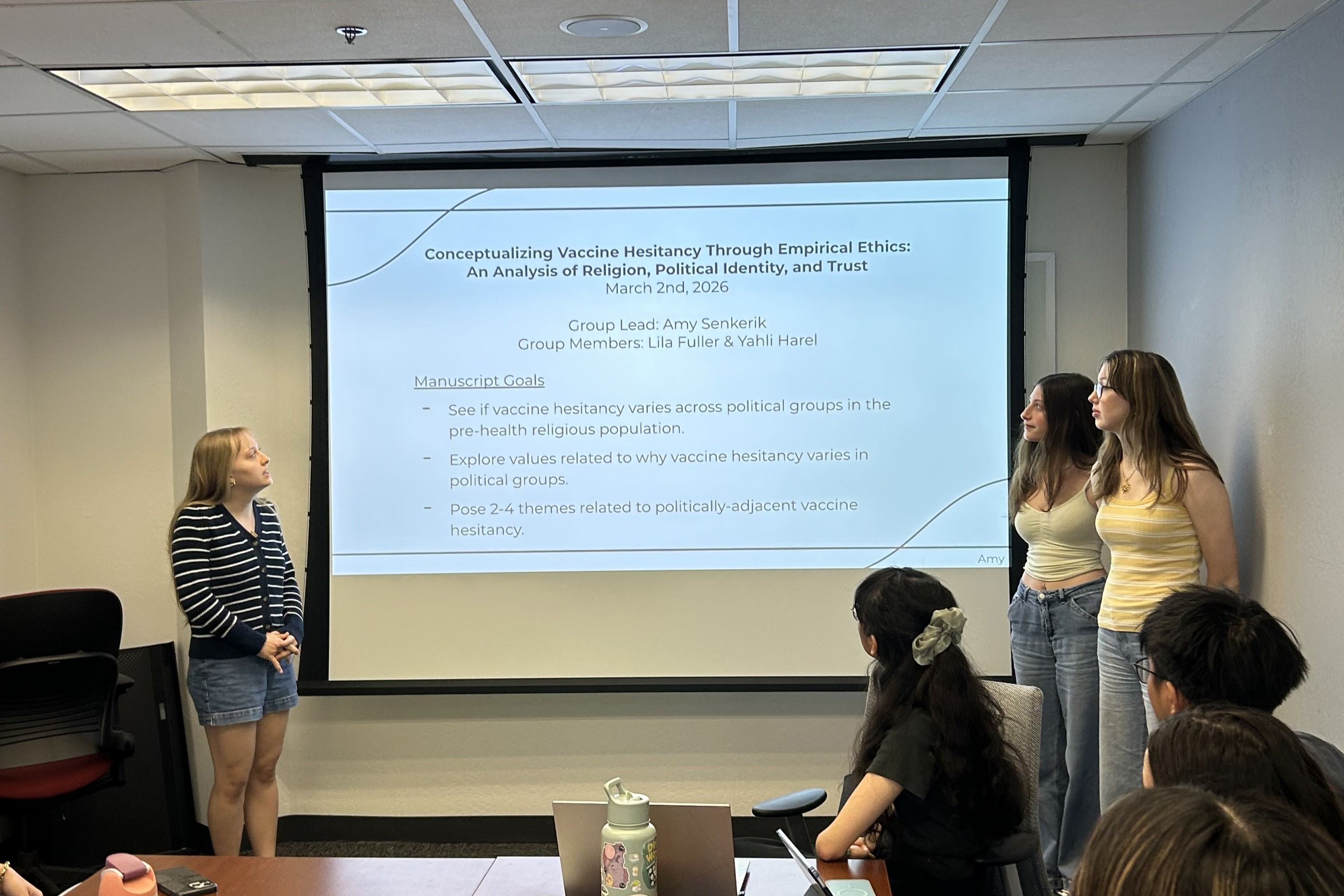
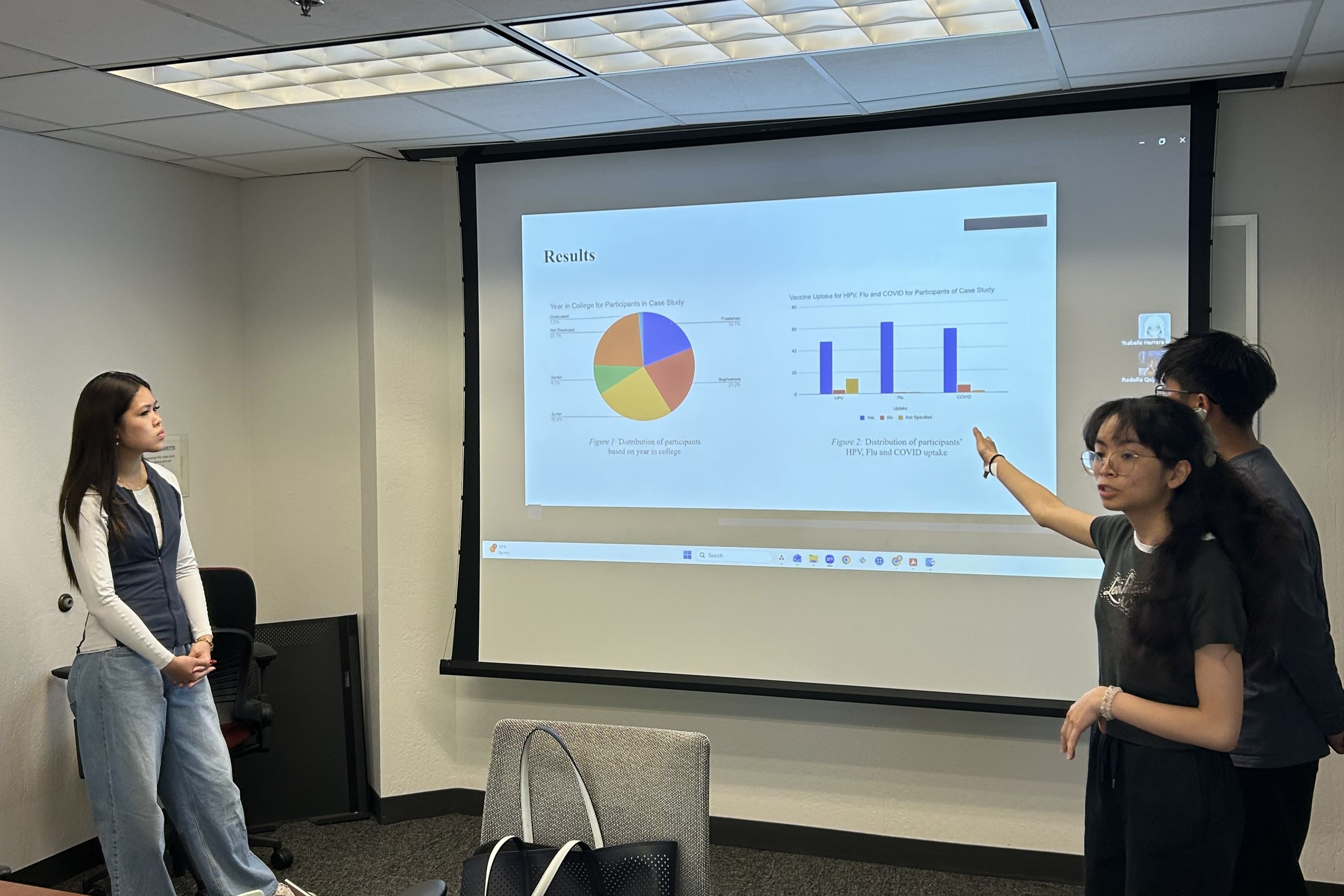
Research team working on the vaccine hesitancy project Research team working on the vaccine hesitancy project

Project 02

Characterizing healthcare provider and patient experiences with implementing genomic medicine in a Federally Qualified Health Center

The proposed project investigates experiences of healthcare providers caring for low-resourced patients in a Federally Qualified Health Center in Phoenix, AZ using mixed-methods, cross-sectional case study

Characterize healthcare provider experiences caring for Latino/a patients receiving PRS in a Federally Qualified Health Center (FQHC) in Phoenix, Arizona, with a contextual emphasis on the setting, social determinants, and normative influences that underpin how healthcare providers integrate genomic medicine into patient care.

We will conduct in-person, on-site semi-structured interviews with up to 20 healthcare providers at MPHC that deliver PRS to Latino/a patients as part of eMERGE IV

Characterize Latino/a patient experiences receiving PRS in a Federally Qualified Health Center (FQHC) in Phoenix, Arizona, with a contextual emphasis on the social determinants that shape to the effectiveness and utility of genomic medicine for them.

We will conduct in-person, on-site semi-structured interviews with up to 8 Latino/a patients at MPHC that received PRS as part of eMERGE III and IV

Research Progress

How this project has formed from the beginning until present

Fall 2023

National Human Genomic Research Institute (NHGRI) grant was awarded

Spring and Fall 2024

Researchers recruited and completed semi-structured interviews with healthcare providers and patients at a Federally Qualified Health Center (FQHC)

Fall 2024

Interviews were transcribed, coded and analyzed to identify major themes related to experiences with genomic testing at an FQHC

Spring 2026

Manuscript titled "Characterizing healthcare provider experiences delivering genomic testing in a Federally Qualified Health Center" was published in Communications Medicine

Project 03

Trust in Health and Research in Arizona

In 2026, it feels like no one trusts anyone when it comes to health. Years after the COVID-19 pandemic, health information is consistently under attack, and trust in health authorities is at an all-time low. There is a lot of confusion surrounding what’s trustworthy information regarding health, emphasizing the need to create a shared sense of community of national and local experts together and generate dialogue between Arizona researchers, community members, and clinical professionals jointly in emerging topics at little or no cost to the research community. These groups may otherwise never interact – let alone trust each other.

To foster ASU and Arizona’s capacity for educating clinical, research, and community members on trust and health, together with Mayo Clinic partners, ASU researchers plan to conduct two in-person working lunch events, one public facing discussion forum, and one virtual working meeting focused on bringing awareness to the pressing issue of trust and health in order to build research capacity and literacy in the area in Arizona.

Prominent Events

Events related to this project

2025

The 13th annual Arizona Bioethics Network Conference happened at Valleywise Hospital in Phoenix, AZ

2025

Partnerships to Foster Trust event happened at ASU's Downtown Campus in Phoenix, AZ. This event was a collaboration with Arizona Department of Health Services and Mayo Clinic

2026

Exploring Transparency: Rebuild Accountability in Health Care event happened in Flagstaff

Forthcoming 2026

Trust in Storytelling Event will take place at ASU's Downtown Campus in Phoenix, AZ